Handwriting
At Burlington Junior School, we intend to foster pupil pride within their presentation and handwriting. Handwriting is among the crucial core skills of transcription which the recent Writing Framework (2025) states should be ‘automatic for children’ as this will ‘free up their working memory for composition’.
We follow the Nelson Handwriting Scheme within Year 3 and Year 4. Children review the basic letter formation taught during Reception and KS1 alongside the four key joins, progressing through the program to practise applying these joins fluently to their writing.
Within Year 5 and 6, our handwriting curriculum becomes more bespoke, with each individual class reviewing joins that have been highlighted as needing further practise. Our handwriting practise ties into key spelling patterns, establishing a muscle memory for the core morphemes that sit at the heart of the English language.
National Handwriting Day Competition Winners
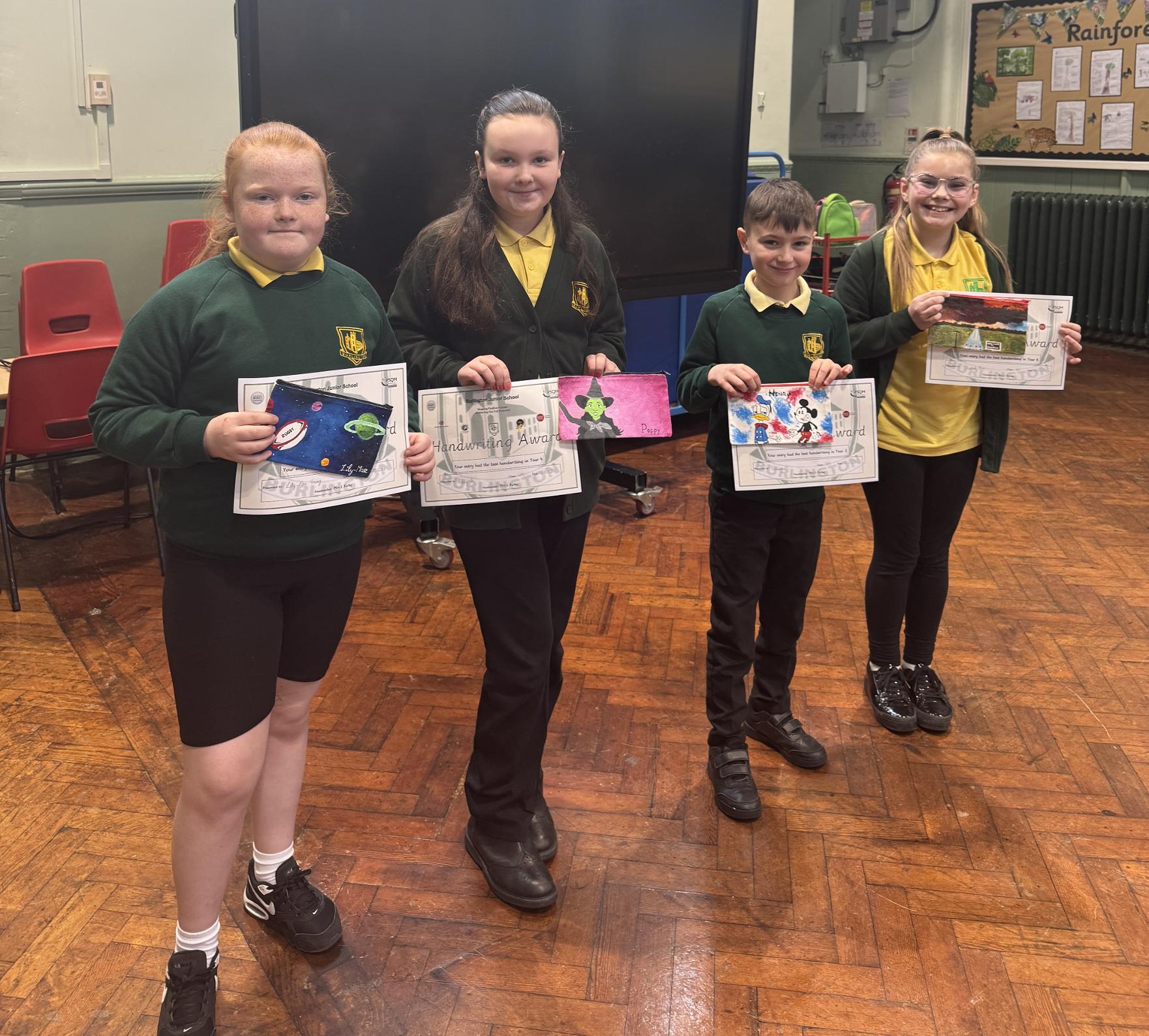
Best Handwriting in their Year Group
Year 3 - Henry M
Year 4 - Poppy A
Year 5 - Lily-Mae Y
Year 6 - Scarlett-Rose B
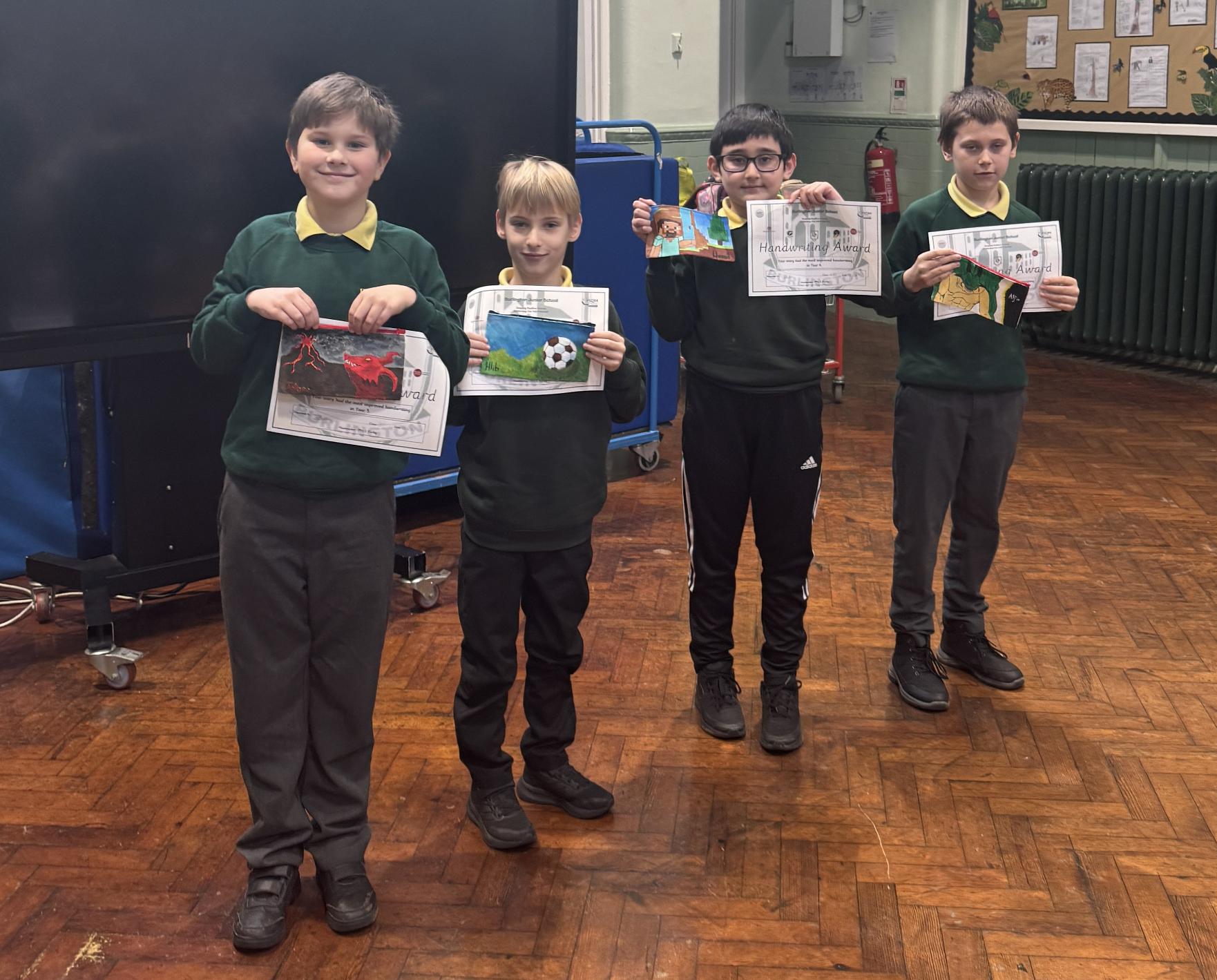
Most Improved Handwriting in their Year Group
Year 3 - Hlib P.
Year 4 - Umut C.
Year 5 - Jethro N.
Year 6 - Alfie R.
Year Groups
Year 3
Throughout autumn term, pupils handwriting is continually assessed, with the standard of joined handwriting clearly demonstrated.

Year 4
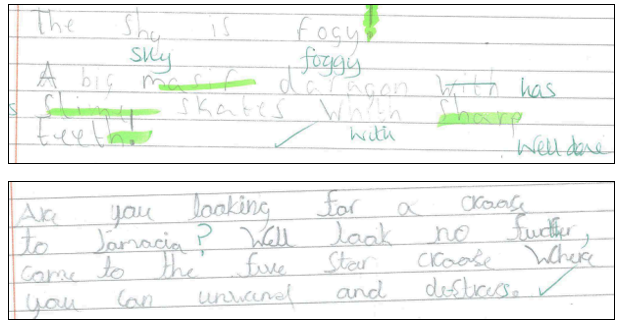
Pupils continue to progress through the Nelson Handwriting scheme, practising tricky and uncommon joins, such as 'ea' and 'sce'. Handwriting is assessed on a termly basis, analysing any inconsistencies that are then addressed during lessons.
Year 5
As pupils enter UKS2, their handwriting lessons become more bespoke, targeting areas of weakness within each class. Clear handwriting targets are given to pupils in order to refine their handwriting (i.e. 'ensure your descenders and ascenders are parallel to each other') and pupils understand what their next step is in order to maintain legibility in joined handwriting when writing at speed.